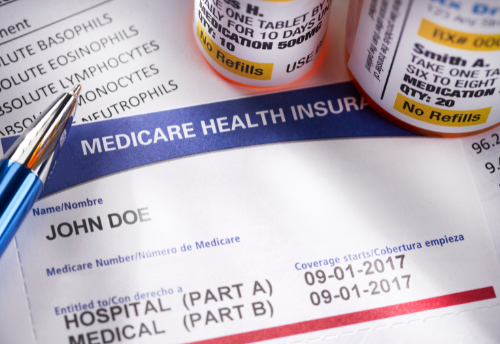
Medicare Premiums and IRMAA: What You Need to Know for 2026 If you're on Medicare — or getting close to it — you've probably noticed…
 Turning a traditional IRA or 401(k) into a Roth account is one of the biggest money questions people think about in their retirement planning. It’s not a simple yes-or-no choice. It depends on your income, your age, and your goals for retirement. Here are some things to consider in making your decision.
What Is a Roth Conversion, Really?
When you convert, you move money from a traditional IRA or 401(k) into a Roth IRA. You pay income tax on the amount you convert right now. After that, the money grows tax-free. You will not owe tax when you take it out in retirement, as long as you follow the rules.
Traditional accounts work the opposite way. You get a tax break now, but the IRS taxes you when you take money out later.
The Big Question: Pay Taxes Now or Later?
This is the heart of every conversion decision. If you think your tax rate in retirement will be higher than it is today, converting now can save you money. If you expect your tax rate to drop once you retire, it may make more sense to leave the money where it is.
Nobody can predict future tax rates for certain. But there are clues. Do you expect a pension, rental income, or a paid-off mortgage that lowers your costs? Are you still working full-time, or winding down? These answers can help you and your CPA find the years that give you the best price on a conversion.
Watch the Required Withdrawal Rules
Traditional IRAs and 401(k)s come with required minimum distributions (RMDs). Under current law, you must start taking these withdrawals from your account at age 73. That age moves to 75 for people born in 1960 or later. These withdrawals count as taxable income, and you can’t skip them.
Roth IRAs do not have this rule. Once the money is in a Roth, you can leave it alone for as long as you like. That gives you more control over your income, and your taxes, each year.
Check Your Medicare Premiums
Here’s something many people miss. A Roth conversion adds to your taxable income for that year. If it pushes your income above certain limits, you could pay higher Medicare Part B and Part D premiums starting two years later. These extra charges are called IRMAA surcharges (see our blog for more information about IRMAA). In 2026, they start once income passes $109,000 for single filers or $218,000 for married couples filing jointly.
This does not mean you should skip converting. It just means the size and timing of a conversion matter. Smaller conversions spread over several years often stay under these limits.
Make Sure You Can Pay the Tax Bill Separately
When you convert, you will owe tax on the amount you converted. It’s almost always best to pay that bill with money from a savings or checking account, not from the retirement account itself. If you pull tax money out of the IRA, you shrink the amount that gets to grow tax-free. If you are under age 59 1/2, you might also face a penalty on that amount.
Think About Your Family
A Roth IRA can be a good gift to leave behind. Your heirs will not owe income tax on qualified withdrawals, and you will not have been forced to draw the account down during your lifetime. Keep in mind that most heirs who are not a spouse must empty an inherited IRA, Roth or traditional, within 10 years. With a Roth, though, those withdrawals are usually tax-free.
A Gentler Approach: Convert a Little at a Time
You don’t have to convert your whole account in one year. Many people convert a portion each year, just enough to fill up their current tax bracket without spilling into the next one. This spreads out the tax bill and gives you more control.
Years when your income is naturally lower, such as right after you retire and before Social Security or RMDs begin, are often the sweet spot for these smaller conversions.
Talk It Through With Your CPA
A Roth conversion touches your income taxes, your Medicare premiums, and your estate plan, all at the same time. The right move depends on your full financial picture, not just one number. Before you convert anything, sit down with your CPA to run the numbers for your own situation and timeline.
If you have questions about whether a Roth conversion makes sense for you, reach out to our team at Kindred CPA. We’ll be happy to walk through it with you.

Related Posts